From January to July of this year, electricity prices have risen 6% with no sign of slowing down. There are several reasons for this – increased demand from data centers, natural gas price spikes, bottlenecks in transmission to name a few. But for real estate owners and operators, it’s less about how we got here than the options for lessening the impact now.
As facility managers know, electricity makes up a huge portion of operating budgets. Sure, triple net leases mean most of those costs are shouldered by tenants rather than owners. But there are plenty of sectors where triple net leases are not prevalent, and plenty of owner/operators who stand to see major disruption in operations if utility costs can’t be contained.
Proactive energy procurement
The nation’s largest grid operator, PJM, is experiencing a continued rise in its procurement costs signaling more demand for electricity than capacity on the market and ongoing pain for utility customers.
Customers see PJM charges on their bills as “capacity charges.” The amount of those charges is set dynamically each year based on an individual customer’s Peak Load Contribution (PLC), or their five highest demand hours from the previous year.
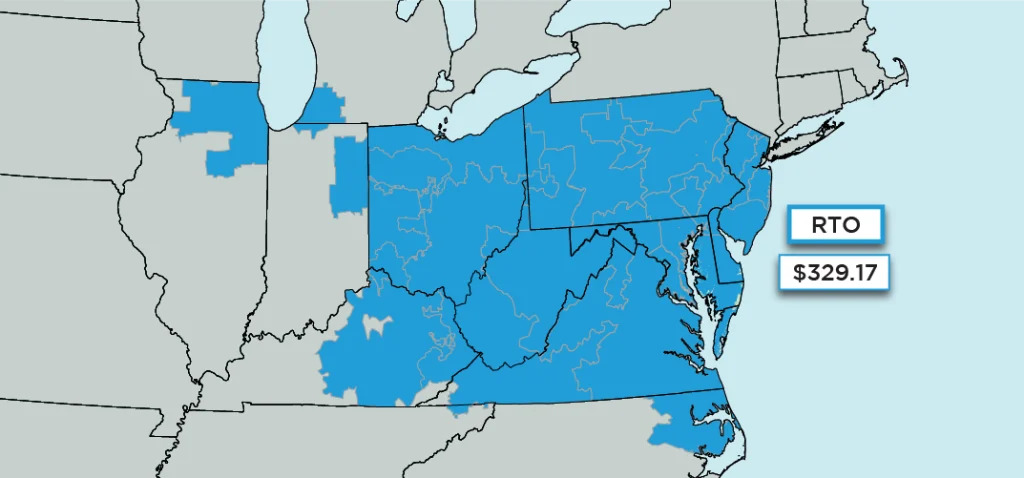
PJM held its first 2025 capacity-price-setting auction (called Base Residual Auction or BRA) in July and saw its costs rise from $14.7B to $16.1B which set the capacity charges at $329.17MW/day for 2026-2027 (up from $269.92MW/day in the 2025-2026 rate year). Also stoking uncertainty and volatility in the electricity market is the change from a three-year forecast model to a one-year model, meaning customer prices will change more frequently.
While last delivery year – 2024/25 saw the single largest jump in clearing price increase – from $28.92 to a staggering $269.92 – these latest increases and changes to auction calendars indicate the price hikes will continue.
All of that is to say proactive energy procurement is a stronger strategy than ever. The rate increases for everyone in the PJM coverage area – 65 million customers – are starting now with the June bills just received. But because increases are sure to continue, it’s important to be proactive and lock in the best rates for the longest terms you can right now.
Energy efficiency is worth more
Your options to reduce the impact of historic rate increases on your operations don’t stop at energy procurement. Next year’s capacity charge recalibration is just around the corner because the peaks you hit this year determine what you pay next year. The fastest way around increased electricity charges is to consume less electricity. The cheapest way to consume less is to optimize the equipment you have.
This focus on demand-side optimization to lower electricity costs and extend the lifespan of expensive operational equipment is where InSite really shines. And during times like these, where costs are soaring to heights as yet unknown, the payback basically calculates itself.
Onward together
We’re actively working with existing customers on both of these options. Our energy procurement team is entrenched in the markets where PJM customers reside and we have options ready to explore.
Our energy engineers are experts at using building data to find high-value, low-cost optimization opportunities and guide your partners through their implementation quickly.
Let’s get started on your tailored utility-cost-increase mitigation plan today. You can’t afford to wait.
About InSite
Founded in 2013, InSite is a leading solution partner for optimization in buildings, extracting value from data to engineer meaningful outcomes for its clients. We deliver financial and operational impact by harnessing our team’s expertise in engineering and building performance optimization. Our Engineered for Results approach combines an intelligence platform that collects and analyzes data for single buildings and entire portfolios with our program management teams who transform data into prescriptive recommendations.