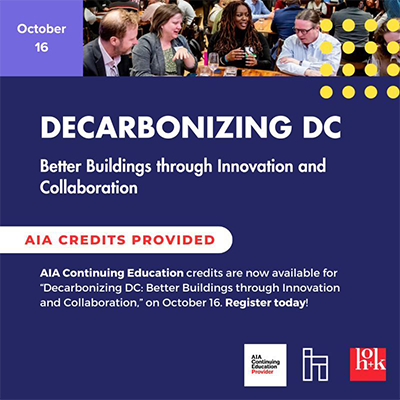
On a crisp fall day in Washington D.C., InSite joined AIA and HOK at the Institute for Market Transformation to discuss “decarbonizing DC” and how we can all support the creation of better buildings through innovation. The one-day summit offered three sessions – the first on electrification, a second on financing and the third was spent unpacking complex challenges with those on the front lines of detailed decarbonization efforts.
Making the case
As with several conferences lately, the focus for each session was on case studies. From Metlife, we heard a presentation on their solar panel installs at their DC office and learned that they were one of the first organizations to get solar panels in the area only a few years ago.
We also heard from a representative of George Washington University about their electrification efforts and their progress with convincing their board to invest in these kinds of projects. The central challenge for organizations like this is getting approval to allocate budget to work toward achieving their decarbonization goals. Compliance is emerging as a top motivator for boards in this regard.
In the financing session, this summit offered a unique take on the options available to organizations. Credits, rebates and again compliance (or the risk of fines) were discussed, as well as alternative financing options for funders like Green Bank, the IRA and federal 179D grants.
At the end of the day, it was clear there is a strong and multi-disciplinary group of people focused on decarbonizing DC, but that there is always more work to be done to hit the moving target. We’re glad to be part of this community and look forward to continuing the conversation.